
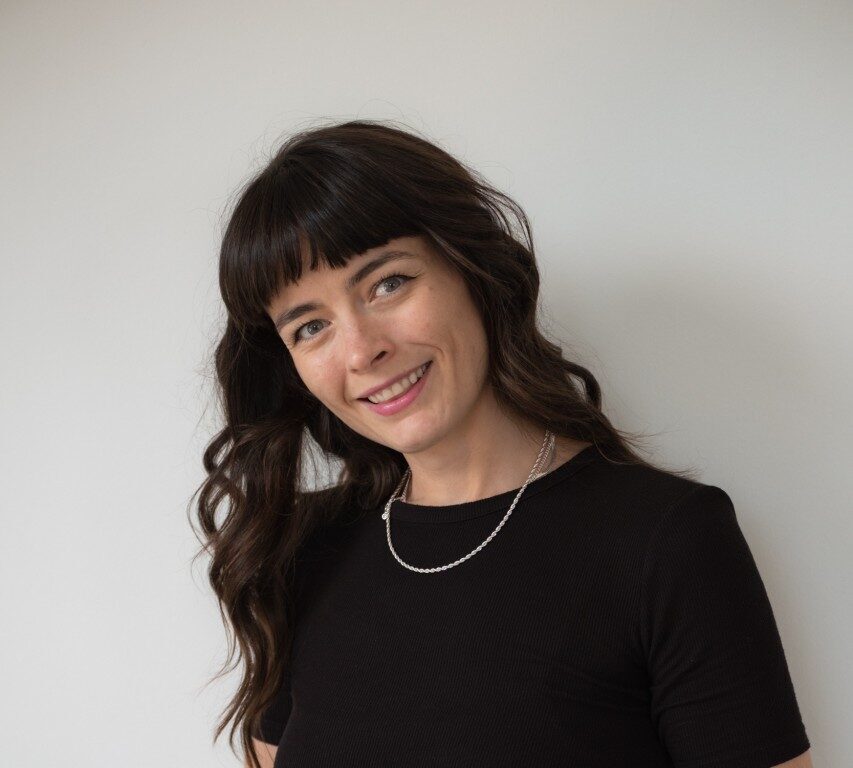
Emily Court is known for a few things: website design and LinkedIn profile design. And — being loud about how her target market is solo-entrepreneurs.
I interviewed her about serving this ICP, which, in my experience, most business gurus advise you against…. in favor of chasing “big fish” for extended, complex, expensive projects or retainers.
Emily’s proven this isn’t the only way to go.
It’s a little bit rare to serve exclusively solos and freelancers — maybe because a lot of people tell service providers to pursue larger companies because they have a lot more budget. What is your rebuttal to that?
Two things. Number one is I don’t love dealing with a dozen stakeholders, and I don’t find the work as rewarding as being able to come into somebody’s life who’s running a solo business and really create a meaningful transformation for them in a week that changes the way they feel about the business, changes the way they pitch, changes the way they promote, changes the way they operate. That for me is much more rewarding than spending six months building a website for an enterprise business. That’s not my bag.
And second, you can sell higher ticket, much higher ticket offers to much bigger businesses, but they’re normally something that you’re going to want to bring a team in to support. That’s not necessarily something I want. I look at it kind of as a side-by-side comparison — fewer clients at a higher price point versus more clients at a more moderate price point — and I’m still able to make what I want to make.
And then I guess there’s a third factor: I like more finite projects. I really enjoy a project that I can be done with in three weeks. High level of dopamine cycling through as I move forward with my business.
How did you tailor your business to fit solo entrepreneurs?
I think it was really about determining the offers that were most helpful to them and not selling them more than they need. I do way more one-page websites now than multi-page websites. The multi-page website is going to be more in the five to ten thousand dollar price point. My one-page website is between 2.5 and 3.5-ish depending on platform. Creating these offers that feel finite and agile, with a pretty quick turnaround, for people that are early in their business — they know they may pivot in a year — they want something that’s easy for them to control and manage. All of this was really important to me.
Did you just intuitively know that? Like, because you’re a solo yourself, or did you do some trial and error?
Well, if we’re talking about the one-page offer, people started asking me for it. It wasn’t what I led with originally, but I got asked for it a lot. And the more I started to build them, the more I realized how much utility they have and how much they make sense for solos. The deeper I got into the website space, the more I found people who are performing at a very high level who have a one-page website and are able to sustain their businesses with that as their primary digital footprint — off of social media, I should say.
How do you do lead generation? It sounds like you need leads really consistently since your projects are all three-week projects.
I used to do a lot of outbound. Now I do virtually zero. Every now and then, if I have a little dip in business, I’ll mess around with it.
My system for marketing myself is that I’m very personal brand-led. I treat a client who books a $300 service with me — those don’t exist anymore, but they did not that long ago — just as valuable as a client that books a $10,000 service with me. That’s been very important for referrals.
And then predominantly it’s organic, personal brand-led on LinkedIn. For every five posts, let’s say one of them is a before and after, a compelling story about what I do, transformations I’ve created for clients. That’s really all there is to it. There’s not that much magic sauce, and as long as I can continue to make people aware of what I do, it hasn’t been a problem for me lately. But it took several years for me to get here, especially inbound.
So outbound — you mean like you were DMing people saying, hey, I do websites?
Yeah. And one thing that’s interesting about the slice from writing to design: despite the fact that I may be a better writer than a designer, my business kind of blew up when I made that transition. That came alongside a big increase in leads, partially because of the people I was serving but also because I think I was a little bit more excited to talk about design as an art form than I was to talk about writing.
I was going to guess that the reason your design business blew up (compared to writing) was because you had a bigger passion for it!
Yeah. People could feel that I was really, really invested and really excited about it. And I also shared the transition publicly — the blood, sweat and tears, shaking, crying, throwing up. I took people through it. Sharing those moments, those transitions, makes people invested in your journey for sure. Storytelling was a huge part of why people bought into it.
Does most of your inbound come through LinkedIn?
Yes. I get 90% of my clients from LinkedIn, conservatively. And I’m not on any other platform.
What is your advice for a visual creative using LinkedIn to get design clients — or photography clients, brand work?
I’m a big believer that there’s no one way to build your business or your pipeline. I am very personal brand, that is so much of why people book me — because they feel valuable with me, because they invest in the very personal stories I tell.
But what I would recommend to most people who work in a visual medium, especially in the era of AI, is more and more show and tell. Right now I do a lot of before and after, and the human psyche finds before and after content very compelling. But I want to be showing more of my process — what happens in my sketchbook all the way through to the digital end product. James Martin is one of the best known names in the design community and he’s a huge advocate for this. It’s something I would 100% recommend, and I should take my own advice on, because I want to do more of that — although it is a big content lift to tell that whole story.
You talk a lot about being a solo entrepreneur and you share the story of it saving your professional life. Can you tell a short story version of that?
I had 26 jobs before I went officially solo, which I was 30-ish at the time. So that’s an astounding turnover rate. I had this real nihilism about the working world — a lot of things were framed as impossible to me, and I kind of thought that work was just always going to be torture.
I had a really hard time fitting into the 40-hour work week, fitting into a mold, and often dealt with bad leadership. That cycle was really challenging for me, and it made me have a bad outlook on my life overall — made me incredibly depressed. I felt lazy and flaky and incompetent.
If I had not stumbled into solopreneurship by accident, I would have looked at my life and said, I can’t even hold a job under somebody else, so I can’t start my own business. But as soon as I made that shift, I went: you know what? I’m not lazy, flaky, or incompetent — I’m actually incredibly driven, a huge self-starter. It changed the entire game for me. Not only did it build up my self-esteem massively, at least professionally, but it changed my entire outlook on my life because I no longer thought that to work was to resign yourself to misery.
You have turned that 26-jobs story into a real triumph story. I imagine there was, at some point, some imposter syndrome. How’d you get over it?
I would love to tell you that I’m over it, but I deal with it every day. A lot of people perceive me as very professionally confident, and in many ways I am. When I’m in the work and doing it, I can really get into this beautiful space of feeling 100% assured. But when I step away from it, I can get into my head as much as the next person.
I see people who have been in their exact field since they started their career, so maybe 20 plus years. .And then I can look at the time I spent all over the map — being like, I’m gonna be a travel consultant, I’m a florist, I’m a portrait photographer — and all of these things can feel like burnt time.
But the further I get into providing services to other businesses and the creative marketing world, the more I realize that the diversity of my experience is a benefit.
What are the challenges of having an ICP of solo entrepreneurs — if there are any?
Very occasionally, you can run into somebody who really treats you as a pixel pusher — they’re maybe a little too oriented toward control. In their minds, they are the design director and you’re just the person who executes, and sometimes when that happens, you can end up with an end result you’re not super happy with. But that said, for me and the way that I want to work, I don’t know that there are too many downsides. And that’s kind of how I landed here.
Budget can be a problem, but if you have a reasonable platform and a solid network, you are going to find the people who want to pay the rates that you want to charge. Lots of solopreneurs are enjoying very successful careers.
Connect with Emily on her website or LinkedIn!
xoxo, your favorite website freak,
Krista


Be the first to comment